
A praying mantis is one of the most fascinating insects in nature. With its unique posture that looks like it is praying and its sharp hunting skills, it captures the attention of both kids and adults. Many people in the USA keep them as pets or find them in their gardens and wonder about their care and survival.
Understanding what do praying mantis need to survive is important if you want to keep one healthy or simply learn more about nature. These insects may look strong, but they are actually very delicate and depend on the right environment, food, and safety conditions. In this guide, you will learn everything in a simple and clear way, just like talking to a friend. By the end, you will know exactly how these amazing creatures live and thrive in the wild or in captivity.
What Is a Praying Mantis?
A praying mantis is an insect known for its folded front legs that look like it is praying. It is a predator, which means it hunts other insects for food. Mantises are found in gardens, forests, and warm environments across the United States and the world.
They are not harmful to humans. In fact, they are helpful because they eat pests like flies, mosquitoes, and small insects that damage plants. Their body is long, green or brown, and designed perfectly for camouflage.
Natural Habitat of Praying Mantis
To understand survival, we must first look at where they live.
Praying mantises prefer:
- Warm climates
- Green plants and bushes
- Gardens and fields
- Areas with good hiding places
They do not survive well in cold weather. In the USA, you will mostly find them in summer and early fall. They depend on plants for camouflage, hunting, and safety from predators.
Without the right habitat, their chances of survival drop quickly.
What Do Praying Mantis Need to Survive in Nature?
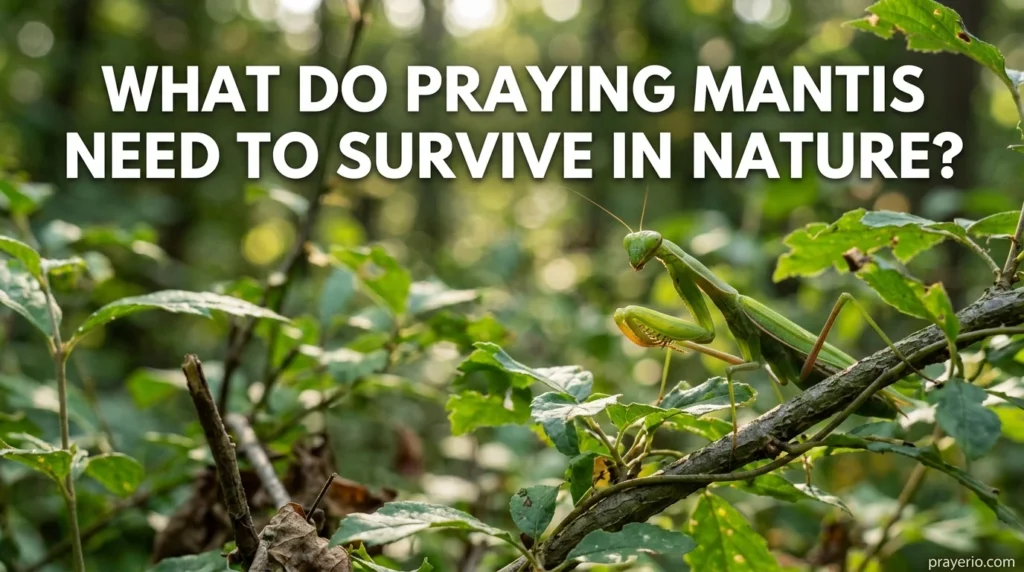
Now let’s directly answer the main question: what do praying mantis need to survive in the wild?
They need four main things:
- Proper temperature
- Enough food
- Safe shelter
- Light humidity and water sources
Each of these plays a big role in their life cycle. If even one of these is missing, a mantis may struggle to survive.
Let’s break them down in detail.
Food Requirements: The Hunter’s Diet
Praying mantises are carnivores. This means they eat only meat—mostly small insects.
Their diet includes:
- Flies
- Crickets
- Moths
- Small grasshoppers
- Other tiny insects
They are very patient hunters. They sit still for hours and attack quickly when prey comes close. Their front legs grab the insect instantly.
Young mantises eat smaller insects, while adult mantises can eat larger prey.
Without enough food, they become weak and cannot grow or reproduce properly.
Water and Hydration Needs
Praying mantises do not drink water like humans. Instead, they get moisture from:
- Dew on leaves
- Rain droplets
- The bodies of insects they eat
In captivity, they may need light misting of water on plants or enclosure walls.
If the environment is too dry, they can become dehydrated. Proper humidity is very important for their survival, especially when they are young.
Temperature and Climate Conditions

Temperature is one of the most important survival factors.
Mantises prefer:
- Warm weather (70°F to 85°F / 21°C to 29°C)
- Mild humidity
- No extreme cold
Cold temperatures slow down their body functions and can even kill them. That is why in the USA, they are mostly active in summer.
If someone keeps them as pets, they must avoid placing them near air conditioners or cold rooms.
Shelter and Protection from Predators
Even though mantises are hunters, they are also prey for many animals like:
- Birds
- Frogs
- Spiders
- Larger insects
They need good shelter to survive.
They use:
- Leaves
- Branches
- Grass
- Flowers
Their body color helps them blend in perfectly with nature. This camouflage is their main defense system.
Without proper shelter, they are easily caught by predators.
Life Cycle of a Praying Mantis
Understanding their life cycle helps us understand survival needs better.
A mantis goes through three main stages:
- Egg stage (ootheca)
- Nymph stage (baby mantis)
- Adult stage
Baby mantises look like tiny versions of adults but without wings. They grow by shedding their skin multiple times.
Each stage requires proper food, warmth, and safety. If conditions are poor, they may not reach adulthood.
Caring for a Praying Mantis as a Pet (USA Guide)
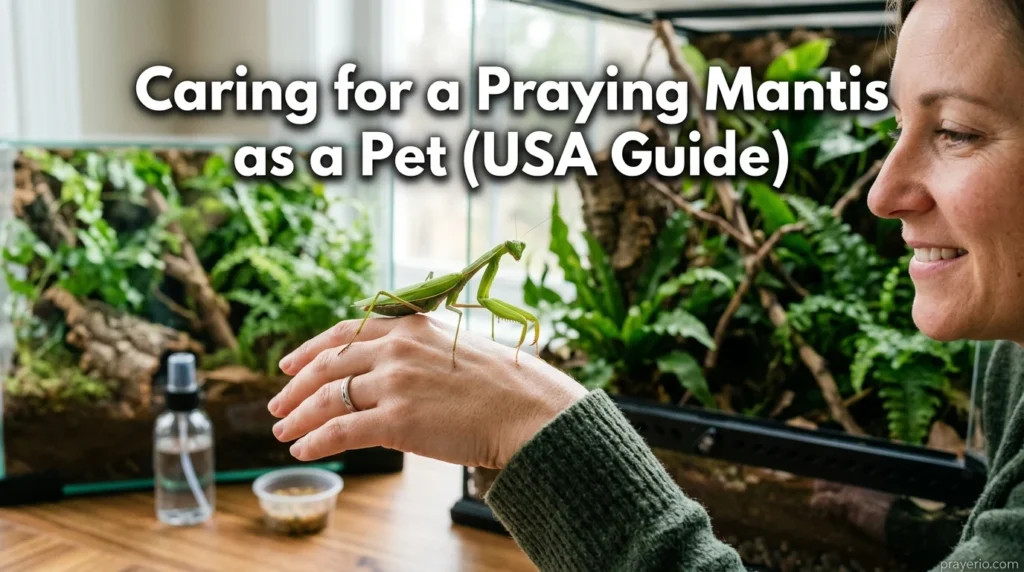
Many people in the USA keep praying mantises as pets because they are unique and easy to observe.
To care for them:
- Use a ventilated container
- Add small branches and leaves
- Keep temperature warm
- Provide small live insects as food
- Mist lightly for humidity
Do not overcrowd them, because mantises are solitary insects. They do not like sharing space with others.
Proper care can help them live peacefully and complete their life cycle.
Common Problems That Affect Survival
Even though they are strong hunters, mantises face several problems:
- Lack of food supply
- Cold weather exposure
- Dry environment
- Predators
- Human disturbance (pesticides in gardens)
Garden chemicals in the USA are one of the biggest threats. Pesticides kill both pests and beneficial insects like mantises.
Short Prayer for Protection and Balance in Nature
Here is a simple prayer inspired by respect for all living beings:
“Dear God, thank You for creating all creatures big and small. Please protect the praying mantis and every living thing in nature. Help us care for Your creation with kindness, wisdom, and respect. Amen.”
Real-Life Meaning and Spiritual Symbolism

In many cultures, the praying mantis is seen as a symbol of patience, stillness, and focus. Its calm posture reminds people to slow down and observe life carefully.
Spiritually, it teaches:
- Patience in difficult times
- Awareness of surroundings
- Balance in life
- Strength in silence
When we observe nature, we often learn lessons that help us in our own lives. The mantis shows that even small creatures have important roles in the world.
Importance of Praying Mantis in Nature
Praying mantises are not just interesting insects—they are important for the environment.
They help:
- Control pest populations
- Maintain ecological balance
- Protect plants naturally
- Reduce need for chemical pesticides
Farmers and gardeners in the USA often appreciate them because they act like natural pest control.
Without mantises, insect populations could grow too fast and damage crops.
Benefits of Understanding Their Survival Needs
Learning about their needs helps us:
- Respect nature more
- Protect beneficial insects
- Improve gardening practices
- Understand insect behavior
- Teach children about ecosystems
Knowing what do praying mantis need to survive also helps people who want to keep them as educational pets.
FAQ – Praying Mantis Survival Guide
1. What do praying mantis need to survive in simple words?
They need food, warmth, shelter, and moisture to live and grow properly.
2. Can a praying mantis survive in cold weather?
No, they prefer warm weather and usually cannot survive freezing temperatures.
3. How long do praying mantises live?
Most live about 6 months to 1 year depending on species and environment.
4. Do praying mantis need water?
They do not drink water directly but get moisture from insects and dew.
5. Can I keep a praying mantis as a pet in the USA?
Yes, many people keep them in simple containers with proper food and warmth.
6. Are praying mantis dangerous to humans?
No, they are harmless to humans and only hunt small insects.
Conclusion
Praying mantises are incredible creatures that teach us about patience, balance, and survival in nature. When we understand what do praying mantis need to survive, we also learn how delicate and perfectly designed life can be. These insects depend on warmth, food, shelter, and moisture to live a healthy life.
Whether you see them in your garden or keep one as a pet, always remember they play an important role in nature. Protecting them means protecting the natural balance of our environment.
If you enjoyed learning about praying mantises, you may also like related topics such as “prayer for nature protection,” “importance of insects in ecosystem,” or “garden protection prayers for USA homes.”

Aortsp Otifak is a faith writer at Prayerio.com, sharing meaningful Islamic prayers, spiritual reflections, and guidance to help readers strengthen their connection with Allah.