
Prayer is woven into the rhythm of a Muslim’s day, providing moments to pause, reflect, and reconnect with Allah. In a city as active and diverse as St. Louis, balancing work, school, family life, and daily responsibilities makes knowing accurate prayer times Saint Louis MO especially important.
Since sunrise and sunset shift throughout the year, Salah times also change from day to day. Whether you’ve lived in St. Louis for years, recently moved to the area, or are simply visiting, understanding how prayer times are calculated and where to pray can help you stay consistent with your daily worship.
Today’s Prayer Times in Saint Louis, MO
Daily Salah includes five obligatory prayers:
PrayerTime Depends OnFajrDawn before sunriseDhuhrAfter the sun passes its highest pointAsrLate afternoonMaghribImmediately after sunsetIshaNightfall after twilight disappears
Because these times are based on the sun’s position, they change every day.
For the most accurate schedule, always check a trusted local prayer timetable from a nearby Islamic center or a reliable prayer time app before offering Salah.
Why Prayer Times Change Throughout the Year
Many people notice that Fajr arrives much earlier during summer while Maghrib is significantly later. During winter, the opposite happens.
This happens because the Earth’s tilt changes the length of daylight throughout the seasons.
In St. Louis, these seasonal differences are noticeable:
- Summer days are long, with early dawn and late sunsets.
- Winter days are shorter, making Fajr later and Maghrib earlier.
- Spring and fall provide a gradual transition between the two.
These natural changes are why Muslims use updated prayer schedules every day instead of following one fixed timetable.
How Salah Times Are Calculated
Prayer times are not estimated randomly. They are calculated using astronomical observations of the sun.
Several recognized calculation methods are used around the world. Common methods include:
- Muslim World League
- Islamic Society of North America (ISNA)
- Umm al-Qura University
- Egyptian General Authority of Survey
Many Islamic centers in the United States use the ISNA or Muslim World League method. Small differences of a few minutes between published timetables are normal because organizations may use different calculation methods or rounding practices.
The Muslim Community in St. Louis
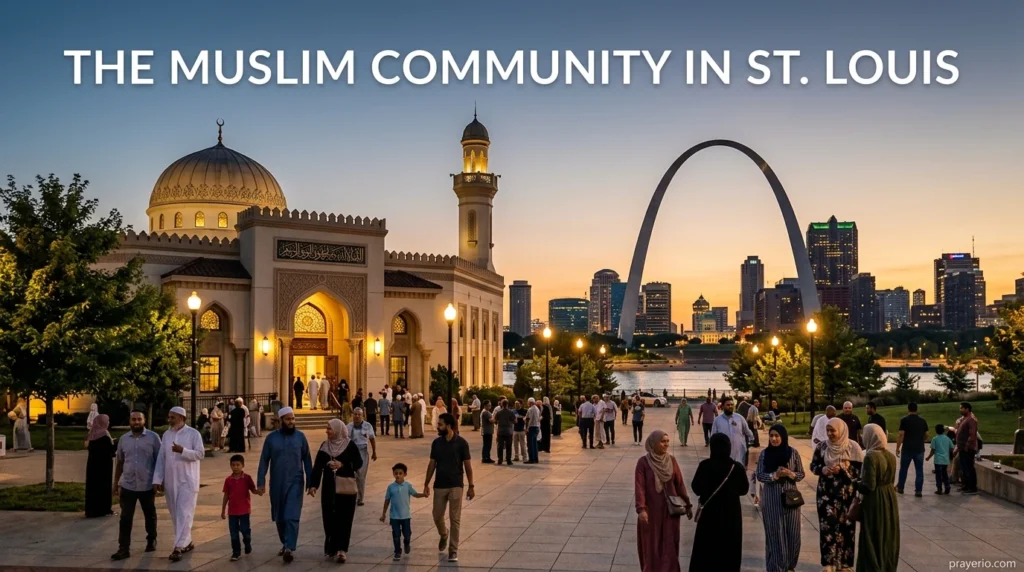
St. Louis has a well-established Muslim community that includes families, students, professionals, business owners, and people from many cultural backgrounds. The city is home to several mosques and Islamic organizations that provide:
- Five daily congregational prayers
- Jumu’ah services
- Weekend Islamic schools
- Qur’an classes
- Youth activities
- Community events
- Ramadan programs
- Eid prayers
For newcomers, attending a local mosque is one of the best ways to become connected with the Muslim community and learn about local prayer schedules.
Mosques and Islamic Centers in the Saint Louis Area
Several established Islamic centers serve Muslims across the metropolitan area. Examples include:
- The Islamic Foundation of Greater St. Louis
- Daar-ul-Islam
- Masjid Bilal
- The Islamic Center of Mid-America
Each mosque may have slightly different iqamah (congregational prayer) times, even though the adhan time is generally similar. If you plan to pray in congregation, check the mosque’s posted schedule before arriving.
Many centers also offer educational programs, family events, counseling, and community outreach throughout the year.
Jumu’ah Prayer in St. Louis
Friday prayer is one of the most important weekly gatherings for Muslims.
Since many people work or attend school during the day, larger mosques in St. Louis often schedule multiple Jumu’ah services to accommodate different schedules.
If you’re attending a mosque for the first time:
- Arrive early.
- Allow extra time for parking.
- Silence your phone before entering.
- Listen carefully to the khutbah.
- Stay until the prayer has concluded.
Checking the mosque’s current Friday schedule ahead of time helps avoid confusion, especially during holidays or school breaks.
Ramadan in Saint Louis
Ramadan brings noticeable changes to daily prayer routines.
During the month:
- Fajr begins very early.
- Maghrib marks the time to break the fast.
- Isha is followed by Taraweeh prayers at many mosques.
- Community iftar meals become common across local Islamic centers.
Because fasting depends on the exact beginning and end of daylight, Muslims should rely on accurate local Ramadan calendars published each year.
Weather does not affect fasting times. Only the sun’s position determines when fasting begins and ends.
Muslim prayer times Saint Louis MO: A practical daily salah guide
Many Muslims look for a practical daily salah guide that includes the five prayer times along with helpful information about local mosques and congregation schedules. Because prayer times change throughout the year, it is important to use a reliable local timetable that is updated regularly.
Islamic prayer times Saint Louis MO: A practical daily salah guide
Islamic prayer times in Saint Louis are calculated using the sun’s position and change slightly each day. A practical daily guide helps Muslims know when each prayer begins and makes it easier to plan worship at home, work, or the mosque.
Morning prayer times Saint Louis MO: A practical daily salah guide
Morning prayer usually refers to Fajr, the first prayer of the day performed before sunrise. Since Fajr begins very early, checking an accurate Saint Louis prayer schedule each day helps ensure the prayer is offered within its correct time.
Fajr Prayer Time St Louis
Fajr prayer time in St. Louis varies throughout the year because sunrise changes with the seasons. Local Islamic centers and trusted prayer calendars publish updated Fajr times daily to help worshippers pray on time.
St Louis prayer times
St. Louis prayer times include Fajr, Dhuhr, Asr, Maghrib, and Isha, with each prayer beginning at a specific time every day. Many Muslims use local mosque schedules or prayer apps to stay informed about both prayer and iqamah times.
IFGSTL prayer times
The Islamic Foundation of Greater St. Louis (IFGSTL) publishes daily prayer schedules and congregation times for the local community. Since iqamah times may change during different seasons or special occasions, checking the latest schedule before visiting is recommended.
Vaktija St Louis 2026
A Vaktija is an annual Islamic prayer timetable that lists daily prayer times for a specific location. If you are looking for the St. Louis Vaktija for 2026, use an updated calendar from a trusted local Islamic organization once it becomes available.
Maghrib time St Louis
Maghrib begins immediately after sunset and marks the end of the daily fast during Ramadan. Because sunset changes throughout the year, Muslims should consult an accurate Saint Louis prayer timetable for the correct Maghrib time each day.
Practical Tips for Staying on Time with Salah

Keeping up with prayer during a busy day becomes easier with a little planning.
At Work
Many employers are willing to accommodate short prayer breaks when requested respectfully.
Helpful ideas include:
- Block prayer reminders on your calendar.
- Keep a travel prayer mat at your desk.
- Identify a quiet room before you need it.
At School
Students can often coordinate with teachers or administrators for brief prayer accommodations.
Planning ahead reduces stress during exams and busy semesters.
While Driving Around St. Louis
Traffic can become heavy during rush hour, especially on major highways.
If you’re traveling across the metropolitan area:
- Check prayer times before leaving home.
- Plan stops near a mosque when possible.
- Allow enough time to pray safely instead of rushing.
Helpful Tools for Prayer Times
Modern technology makes it much easier to stay aware of Salah times.
Useful options include:
- Prayer reminder apps
- Smartwatch notifications
- Digital Islamic calendars
- Mosque websites
- Printed monthly prayer schedules
If you use an app, make sure it is configured for your exact location and preferred calculation method.
Tips for New Muslims
Learning to organize your day around the five daily prayers takes time.
A few simple habits can make the transition easier:
- Start by learning the names and order of each prayer.
- Set reminders until the routine becomes familiar.
- Visit a local mosque to meet other Muslims.
- Ask knowledgeable community members whenever you have questions.
- Remember that consistency grows gradually through regular practice.
Many Islamic centers in St. Louis welcome new Muslims and offer beginner-friendly classes and mentorship programs.
Understanding Iqamah vs. Adhan
Many people notice that the posted mosque schedule includes two different times.
The adhan is the call announcing that the prayer time has begun.
The iqamah is the announcement made shortly before the congregational prayer actually starts.
For example, Dhuhr may begin at one time, while the congregation gathers 10–20 minutes later.
Knowing the difference helps you arrive with enough time to prepare for prayer.
Planning Your Day Around Salah

Daily prayer becomes easier when it is treated as part of your normal schedule rather than an interruption.
Consider:
- Checking the day’s prayer times each morning.
- Scheduling meetings around Jumu’ah whenever possible.
- Completing errands before Maghrib if evenings are busy.
- Keeping prayer essentials in your car or backpack.
- Using prayer as a regular opportunity to pause, reflect, and renew your focus.
Small routines often make long-term consistency much easier.
Frequently Asked Questions
Why do prayer times in Saint Louis change every day?
Prayer times depend on the sun’s position. Because sunrise and sunset shift throughout the year, each day’s Salah schedule is slightly different.
Which calculation method is commonly used in Saint Louis?
Many mosques and prayer apps serving the United States use either the Islamic Society of North America (ISNA) or Muslim World League method. Always follow the timetable used by your local mosque for consistency.
Can different mosques have different prayer schedules?
Yes. The beginning of prayer time is usually very similar, but iqamah times often vary depending on each mosque’s schedule and community needs.
Where can visitors pray in Saint Louis?
Several mosques and Islamic centers throughout the St. Louis metropolitan area welcome visitors for daily prayers and Jumu’ah. It’s a good idea to confirm prayer and office hours before your visit.
How early should I arrive for Jumu’ah?
Arriving at least 15 to 20 minutes early gives you time to find parking, perform wudu if needed, and listen to the khutbah before the prayer begins.
Conclusion
Daily prayer provides structure, peace, and a constant reminder of one’s relationship with Allah. Because prayer times in St. Louis change with the seasons, checking an accurate local timetable each day helps ensure every Salah is offered within its proper time.

Whether you’re a longtime resident, a student, a professional, or just passing through, staying connected with a local mosque and planning your day around prayer can make worship more consistent and less stressful. With a little preparation and sincere intention, observing the five daily prayers becomes a natural and rewarding part of life in Saint Louis.

Fores Toris is a contributor at Prayerio.com who writes about daily duas, Islamic teachings, and inspirational content to support Muslims in their spiritual journey.